










"At Frasers, we take our commitment to every project, and every investor, builder, subcontractor, supplier, and customer we work with seriously. That means putting in place financial frameworks and processes to ensure that every dollar is used for its intended purpose, and there is full accountability and transparency over the budget for a project.” “We’re so excited about the Encompass development, which has a real ‘wow’ factor, and through IPEX we’re better positioned to deliver the project securely and successfully.”
Sarah BloomGeneral Manager Development Victoria
“We have many great, long-standing relationships with developer-builders, but there’s no question that this model can add an element of risk for us as financiers. Managing this additional risk can also create a great deal of extra admin for both parties.
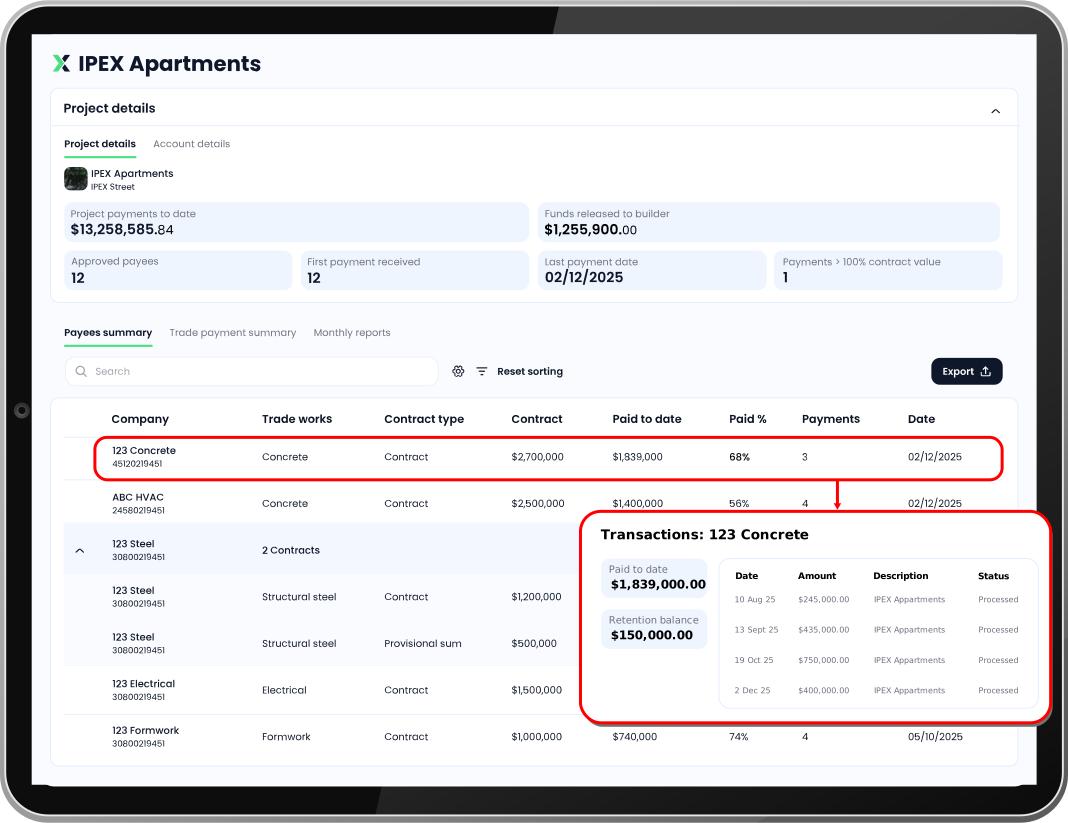
IPEX allows us to automate payment oversight & integrity checks, delivering better governance, earlier risk detection and enhanced investor confidence.”
Henri HinesSenior Portfolio Manager
After a year of utilising the IPEX platform on one of our key commercial construction projects, the experience has been overwhelmingly positive. The platform’s user interface and our customer service experience have exceeded our expectations, significantly bolstering the security and efficiency of our collaboration with the builder. The adoption of IPEX has been embraced by the builder and & it provides additional comfort to trades particularly with the current construction industry challenges.
John VickersDirector
“Based on our experience IPEX should be
mandatory. It is now an integrated and essential part of our governance. It’s delivering a new standard of providing trust downstream to our subcontractors and
suppliers that they’ll be paid and upstream to our clients and the financial institutions funding these projects.”
Ken O'ConnorDirector 
"From the moment I understood what IPEX provided I had no hesitation in introducing it to BlueScope. With such a major capital works project it was clearly a very prudent risk management tool. With hundreds of millions of dollars being paid to suppliers and subcontractors through major contractors, securing certainty that monies were being delivered into the accounts of the substantial number of subcontractors and suppliers was critical.“
Steve ChandlerCEO 
“IPEX delivers the security of funds subcontractors need on projects. Everyone prices risk into jobs; however, with the IPEX concept, there is a reduction of payment risk, which should translate into a more competitively priced trade insurance outcome. It’s really in everyone’s best interests in the long run to use IPEX.”
Sam LeslieGeneral Manager 
“Once we were aware of IPEX and decided to implement this new standard for project payments, it was a seamless onboarding and end-user experience. It reduces risk and addresses trust and relationship building in one platform. This will put us in a powerful position as the demand for construction labour increases.”
Rob MoolmanManaging Director